Shy, but not anti-social (I promise)
Someone once asked me what attracted me to sound. My unprepared answer was: it's a way to be with people without having to talk to them.
Which makes me sound terribly anti-social—and I'm not. I'm secretly quite shy and a little anxious in groups of people, so being in a space which allows for social interaction without small-talk, eye-gazing, or cuddle-fests is a perfect fit.
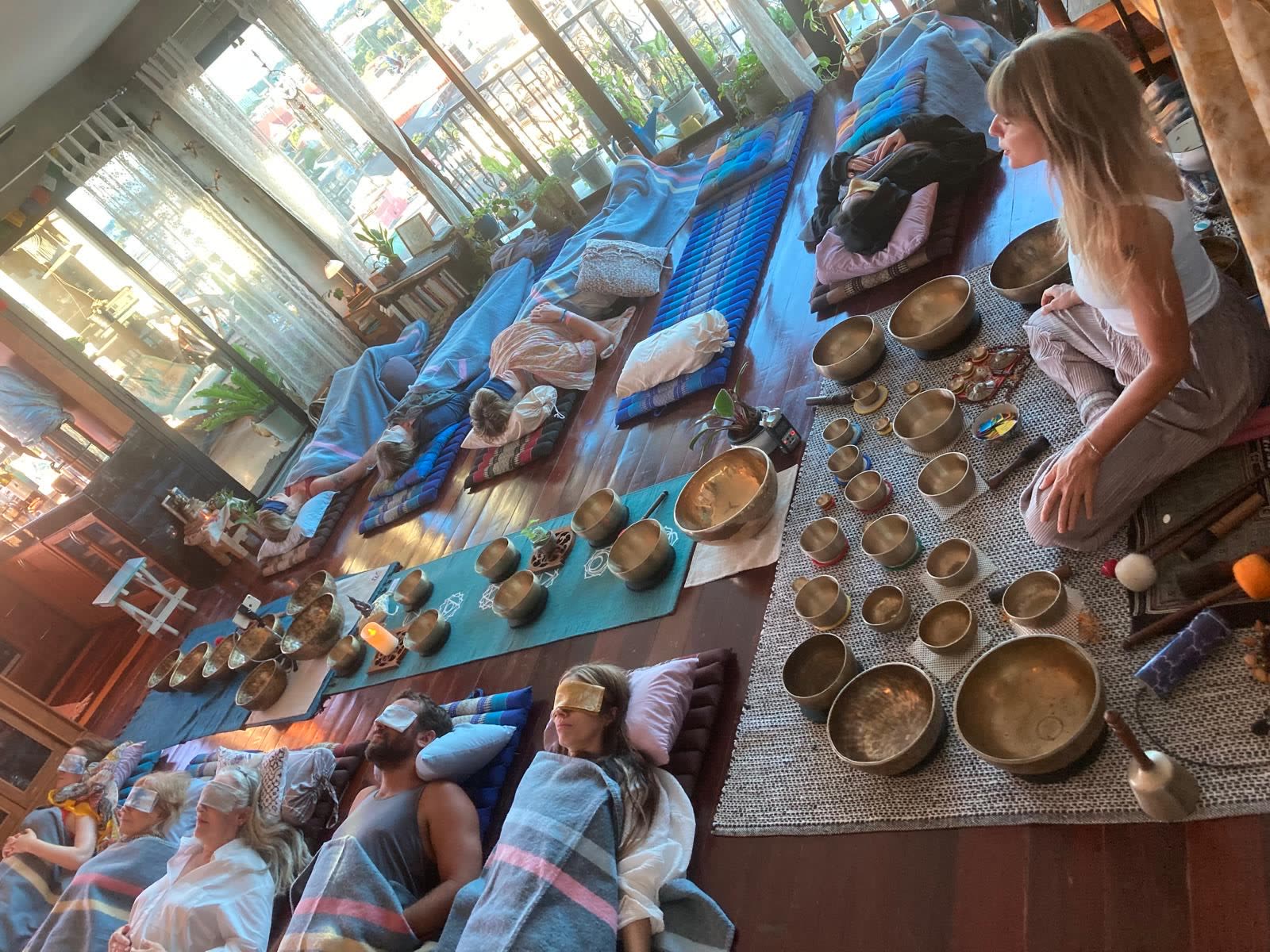
I'm a singer, and I hold sound journeys here at BlackCrow: you lie down, close your eyes, and let bowls, gongs and voice wash over you. For a long time I thought of that answer as a quirky confession. Lately, I've come to think it might be the whole point.
Joyfully swimming in learning theory
I've been joyfully swimming in research on developmental learning theories these past days, for another project dear to my heart. What I am rediscovering (since my formal education was early learning) is that learning is social. Sure, we can consume information in a silo, but true integrated learning always has social underpinnings.
So, how the heck does that have anything to do with sound?
More than you'd think. And while it might seem like a stretch, let's consider generously, openly some fresh ideas. I shall point out the stars; you're welcome to draw the constellation.
Co-regulation, meet resonance
What if the sound journey offers other people what it offers me? And what is that benefit? Co-regulation. Which I really want to call resonance. They're not quite the same thing, but they rhyme—look:
Co-regulation is the idea that nervous systems don't settle in isolation. We calm down by picking up cues of safety from others, like a steady voice or slow breath, and sound is one of the oldest ways those cues travel. A lullaby soothes through rhythm, pitch and warmth, not through what the words mean.
Resonance is what happens when one vibrating thing sets another vibrating without touching it. Strike a singing bowl, and a bowl of matching pitch nearby will begin to hum on its own.
Side by side:
- One person's calm helps another settle.
- One vibrating thing sets another vibrating.
There's some lovely science humming underneath this. Researchers have found that slow music can quietly draw our breathing toward its pace—without us even trying—and that heart rate and blood pressure tend to follow. This is called entrainment. One study even found that when the music paused, people's breathing, heart rate and blood pressure dropped below where they started. (Anyone who has lain in the silence after a gong fades knows that feeling.)
The same research noticed similar calming rhythms in the yoga mantra and the rosary prayer, and studies of singers show that slow, phrase-by-phrase singing gently couples breath and heartbeat. Mantras work this way: the repetition and the tone do their quiet work, whether or not we understand a single word.
And the voice? The neuroscientist Stephen Porges has proposed that our nervous systems are tuned to pick up the warm, melodic quality of a safe human voice. His polyvagal theory is hugely popular with therapists, and also hotly debated by other scientists, so I hold the details lightly. But the broader point, that voice and sound carry signals of safety our bodies respond to, is one I feel every time I sing to a room.
Your nervous system is taking notes
And what is so great about co-regulation, other than the obvious calm state and its obvious benefits?
Learning. Here's the part my early-learning heart loves most: in child development, co-regulation comes before self-regulation. Little ones can't calm themselves at first, so they borrow calm from the adults around them. Each time it happens, they learn a little more about the way back, until one day their bodies can find it on their own.
We don't outgrow this. We just stop noticing it.
So a sound journey isn't only a lovely setting for learning. It is learning. While you lie there, your nervous system is practicing what safety feels like, resonating with the bowls, the voices, and everyone breathing beside you, so it can find its way back there when you're alone.
That's what sound gave me, the shy one in the corner: a way to be held by a room full of people without having to say a word. And it's what I hope to offer you.
Lie down, and notice
Life hands us chances to learn something new every day, and most of them slip right by in our overbusy, dysregulated states.
So next time you lie down in the sound, I invite you to notice what your body is learning. Notice the moment your breath slows. Notice the people around you settling. Notice what happens when the singing begins. You may find you already know the way.
If you'd like to experience this for yourself, come and join me for a sound journey at BlackCrow. Message me on WhatsApp →
For the curious
- It Takes Two: The Role of Co-Regulation in Building Self-Regulation Skills (ZERO TO THREE): how warm, responsive caregiving helps little ones learn to calm themselves
- The sound of silence is music to the heart (Heart, BMJ): on music, breathing entrainment, and the calming effect of pauses
- Slow music is good for the heart, study finds: a plain-language summary of the same research
- Music structure determines heart rate variability of singers (Frontiers in Psychology): humming, hymns and slow mantra
- Significant, Not Sacred: a clinician's overview of the 2026 debate over polyvagal theory